Can Women Speak in the Church?
Can Women Speak in the Church?
On the Bible and Human Rights and Dignity
Witness 1
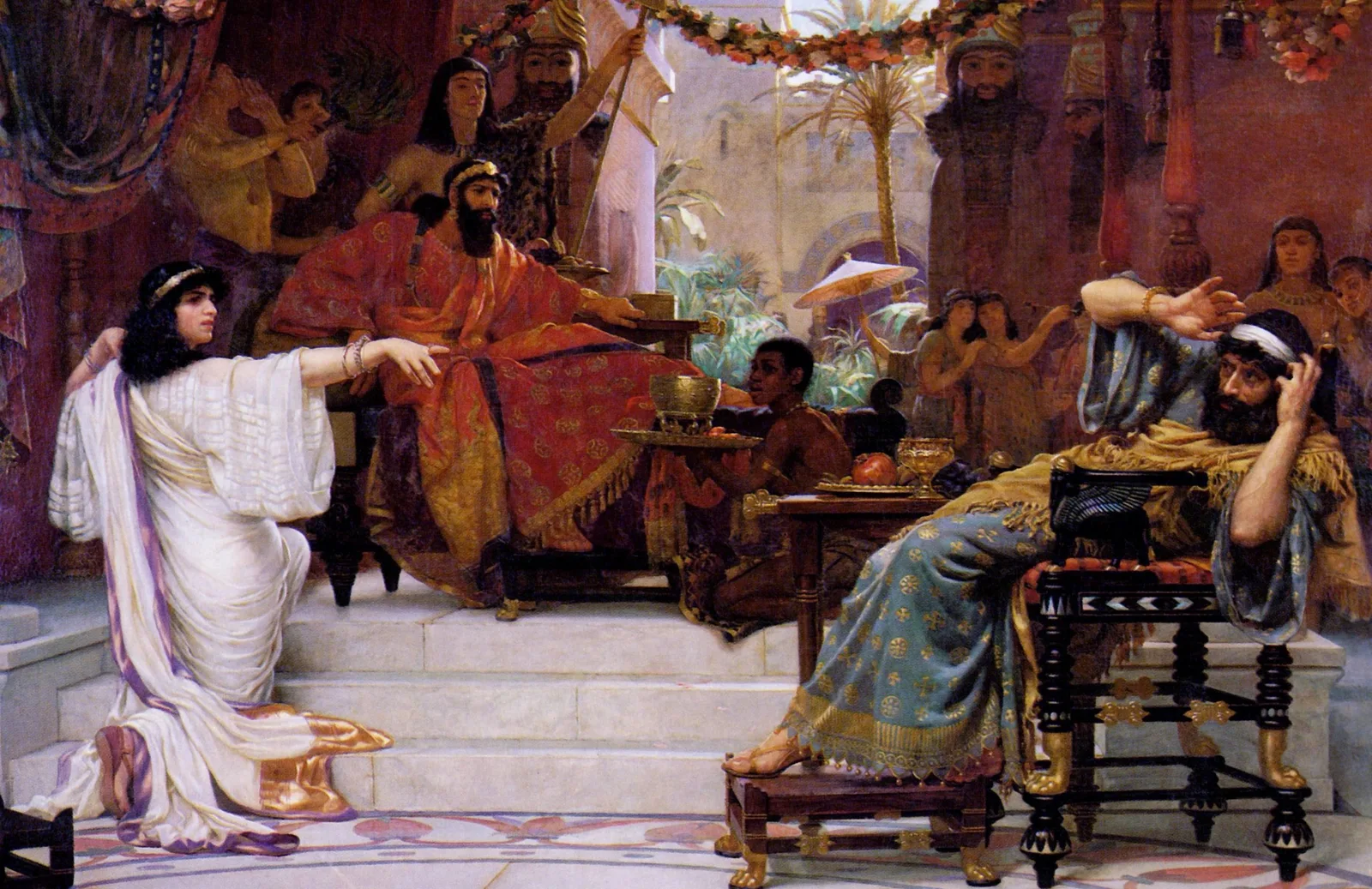
I want to take a closer look at one of my common misconceptions about Christianity - that the Bible does not support human rights and dignity, and specifically a verse that is often misused, misrepresented, and mischaracterized from the Pauline epistles about the behavior of women in the ancient church.
While there are parts of the Old Testament that are hard to understand today, we must understand the difference between descriptive and prescriptive language used in the Bible. While the Bible describes many things, just because they are in the Bible does not mean that God is endorsing them.
That being said, even the prescriptive moral laws governing interpersonal conduct, formalized and contractual social relationships, and crime that are laid out in the Bible were a huge step forward, making the Bible a landmark of human rights for its time.
While certain moral actions or regulations, therefore, may seem distasteful or even unimaginable to us today, they were given to a much younger, less developed, and less morally and socially aware and accountable people. They were given at the time they were written for, which actually pulled a people and a world forward in morality and the struggle for human dignity, rather than backwards.
The Bible is a fourth-dimensional, many-layered object capable of communicating through multiple mediums. Not only a narrative, written over generations by disconnected authors, most of whom never met over the 1600 years or so that the Bible was compiled, but a complex philosophical tome capable of holding its weight with the likes of Plato, Hammurabi, and Aristotle.
Without the Bible, the image of man is void, a universal orphan child floating in an uncaring sea of nothingness. The Bible’s statement on man as being in the image of God lends him the dignity that we all deserve, and its power on the collective subconscious of mankind is unquantifiable but certainly not insignificant.
So, while we’ve all heard the worst verses of the Old Testament, let’s not forget that even laws that are grossly behind ours, like describing the fine for beating a slave or fines to the father of a rape victim, were a huge step forward for the time, not backwards. These regulations protected people that were previously unprotected, and allowed them a divinely prescribed dignity and worthiness that they used to justify a better quality of life. In short, the Bible has served as an engine of human rights, and can be looked at as a driver of positive change in society, even if the moral standards of society have shifted.
I think that all can agree that as the march of time goes on, human rights and dignity, in general, increases and improves. From unions, to weekends, to better and safer jobs, the trend and growth of society and its laws to protect people, in general, get better over time.
In the same way as the New Testament was about 2,000 years after the Old Testament started, we are now about 2,000 years out from when the New Testament started. In Jesus’s day, the people had grown a vast and complicated legalistic system with a functioning series of judges, punishments, and state-vested authority to run a county for thousands of years.
In the same way as the Jewish society of Jesus’s day had seen tremendous change from the day of Abraham’s desert tribes, today we also live in a different world than the authors of the New Testament. Society and the world have come a long way, and people are, in theory and overall, more and more able to pursue a life of dignity and purpose, with rights and safeties guaranteed by the state. While this is not always true, the march towards it as a philosophical idea to triumph over the greed and self-serving nature of many government and politicians is slow, but inevitable.
In the same way our human rights have grown and improved. So, when Paul says the verse about women speaking in the church, we can look at it as a huge leap forward, in that women weren’t ever allowed into synagogues for thousands of years and were physically excluded from many parts of the largely patriarchal Jewish society.
Paul welcoming women into the Christian church, as well as Jesus’s many notable examples of honoring and cherishing his women followers, therefore represents the opening arms of the faith for women, and a milestone in human rights overall. This is a key point to understand.
Let’s look at exactly what he says:
- 1 Corinthians 14:34–35
- As in all the churches of the saints, the women should keep silent in the churches. For they are not permitted to speak, but should be in submission, as the Law also says. And if they desire to learn anything, let them ask their own husbands at home; for it is improper for a woman to speak in church.
Now, unlike many apologists, and this controversial verse is no stranger to them, I’m not going to sit here and pretend that, in its context, this verse from 2,000 years ago doesn’t tell women not to speak in churches. It does say that, “as in all the churches of the saints.”
However, this verse needs to be interpreted closely. Let’s look at what a credible source has to say about it:
- If we take this literally, it would mean that women are not allowed to sing in church nor respond when the pastor asks for comments or questions from the audience. Moreover, it would contradict what Paul said in chapter 11, where he said that women could pray and prophesy in church if they had the appropriate attire.
- Common sense, church custom, and good principles of biblical interpretation all say that we should not take these verses literally—and almost no one does. Paul is not making a blanket prohibition that says that women can never speak in church. Rather, he was addressing his comments to a certain situation, and his comments are limited in some way. The question is, What are the limits of Paul’s prohibition? In this chapter, we examine the context and look at the details of these verses.
- The first thing we notice is that women are not the only people Paul tells to be “silent.” He uses the same word in verses 28 and 30 to tell tongue-speakers and prophets to be silent when others speak. In both of those verses, he is calling for a temporary silence, not a complete and permanent prohibition.[5]
- The word for “speak” (laleō) does not necessarily mean a formal role in the pulpit—it is a general word that can also be translated “talk.” Paul used a general word to say that women should not talk, and we have to make an interpretive choice: Was he prohibiting formal speaking roles, or talk in the audience,[6] or something else?
- Paul says that instead of speaking, women should be in submission. This implies that the Corinthian women were speaking in an insubordinate way. The fact that Paul said in chapter 11 that women could pray and prophesy, and in chapter 14 that two or three people could prophesy in a worship service, shows that women are allowed to have a slot in the speaking schedule. It is not insubordinate for them to speak prophecies; it is therefore likely that Paul is prohibiting some less-formal speaking, such as chatter or comments from the audience.[7]
- Paul has already indicated that women can pray and prophesy in church (chapter 11), and a worship service includes two or three people prophesying in turn (14:29-32). This means that it is permissible for women to have formal speaking roles in the church. Paul was apparently forbidding some other type of speech. Just as he did not allow tongue-speakers or prophets to speak out of turn, he did not want women to speak out of turn, saying things in such a way that they were breaking social customs about what is appropriate.
- 2) We have surveyed the Old Testament, and find no prohibition on women speaking in public.[22] Scripture provides examples of women who had leadership roles in civil government, in publicly praising God, and in giving authoritative answers about spiritual matters to male civil leaders (e.g., Deborah, Miriam, and Huldah). Scripture does not require all women to submit to all men. The problem in Corinth probably involved either a) wives speaking against or dishonoring their husbands,[23] or b) more generally, women acting disorderly and for that reason considered “not in submission.” The “law” that Paul mentions may be a civil law, or a New Testament rule.
- It is reasonable to suggest that Paul is prohibiting the same kind of speech that he prohibits for tongues-speakers and prophets: out-of-turn speaking. While someone has the podium, the others should be quiet, not making loud comments, not calling out questions (no matter how well intentioned[35]), and not having their own conversations, for any of those would be disgraceful in the eyes of the public, contrary to what God wants, and contrary to the way that other congregations functioned.[36]
- Conclusion
- Although we cannot answer all questions about the specific situation Paul was addressing in Corinth, we do conclude that he was addressing a specific situation rather than making a general prohibition on women speaking in church. His intent was to prohibit disruptive and disrespectful questions and comments that were part of the chaotic Corinthian meetings—and in Corinth, these particular practices were coming from the women. Just as he told the disorderly tongues-speakers and prophets to control themselves because God is not a God of disorder, he also told the women to control themselves because the law teaches self-control. If they want to learn something, they can ask questions somewhere else.[43]
- Only one person should speak at a time. Everyone else, whether male or female, should be quiet, for it is disgraceful for people in the audience to be talking while someone else is speaking to the group. Just as Paul’s call for tongues-speakers or prophets to be silent should not be turned into a demand that they never say anything at all, so also his call for women to be quiet should not be turned into a demand that they never give messages of spiritual value in church. That is something that Paul specifically allows in chapter 11.
So, I think that sums it up well. My final point is that anyone reading the Pauline epistles from a legalistic perspective is totally missing the point – this is key. Paul explicitly argues against a legalistic interpretation of Christianity and the redemptive power of faith over all. The reason he is a notable figure is because of his dissension with the Jewish elite at the time and the hypocritical yet codified legal structure at the time.
So, anyone picking and choosing one verse out of Paul’s letters and saying he is imposing this as a moral prerogative is reading them wrong. He is talking to a specific people that he knew, and reading it in context allows us to see it for what it is - a step forwards in human rights and dignity overall. It is OK if society keeps progressing beyond the human rights of 2,000 years ago, just as society in Jesus’s day had progressed beyond the human rights of Abraham’s day.
Paul’s theology, the Christian theology of today, is at its core, not merely a list of do’s and don'ts. It’s a relationship with Jesus Christ, God, and the Holy Spirit, and while our actions are greatly important, what matters most in the New Testament, or New Revelation, to mankind is his heart, his faith, and the quality of his soul. The lists of rules were in the past, and we now live by the Golden Rule, the Rule of Love - Do Unto Others As You Would Have Them Do Unto You.
May God bless you all.
-Witness 1